Rust, what the "harbor guys" run looks like in practice
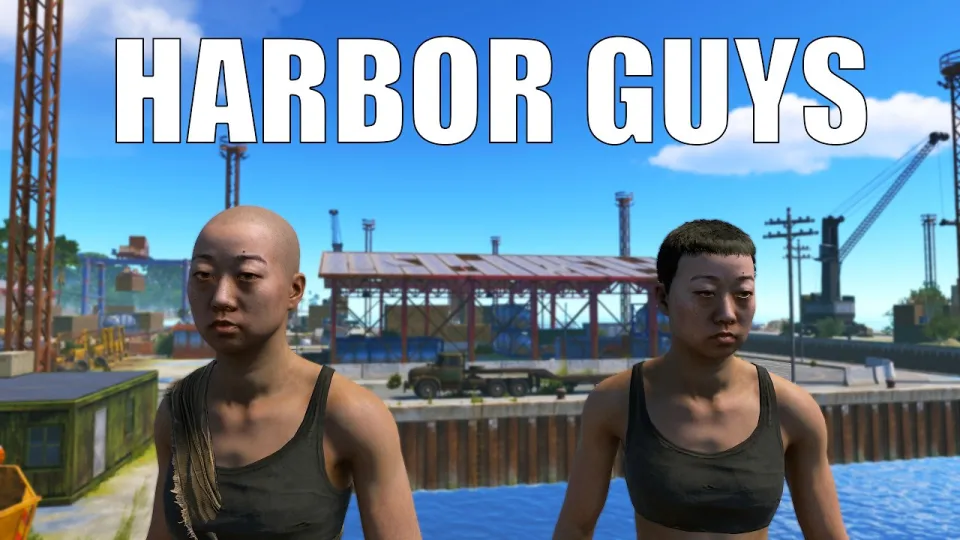
Video: harbor guys
Want articles like this for your own video to promote it on YouTube and Google? Order them through the Telegram bot @sat_sit_bot. It writes articles around your video, embeds the video and publishes them on popular niche websites (no ads). Your first 50 articles are free.
· based on the channel spoonkid2
Key takeaways
- The video is a roughly three-hour Rust session edited down to a single "harbor guys" storyline by spoonkid2.
- Viewer tallies put the run at about four kills and one successful harbor jump.
- A large share of the session goes into repeated attempts at a single parkour jump onto a building.
- The run leans on Monument harbors, Cargo and roleplay banter instead of clan-scale raids.
- Editing and music are by dinkbot; the video description also carries a Factor promo code and the monke.clothing drop.
Rust is a survival game where a solo player has to secure food, shelter and gear while other players try to take it; in the "harbor guys" format, that means two players settle on a Monument harbor, farm its crates, chase Cargo and treat the whole wipe as a hangout rather than a grind. The spoonkid2 video of that name follows exactly this loop: a long session cut down to a few fights, one stubborn parkour jump and a lot of conversation. Anyone who wants to try the same style can start with the Factor discount offer from the video and then read on for what the run actually involves.
What "harbor guys" means in Rust
A harbor run is a low-stakes Rust start built around the small Monument harbors instead of a clan base or a high-tier monument. The harbors are compact, they spawn crates and barrels in predictable spots, and they sit on the coast, which makes them easy to reach with a boat and easy to leave when a fight goes wrong. In the video, the two players commit to that identity fully: they live at the harbor, they loot the harbor, and they describe everything they do as something harbor guys do. The result is a session that produces modest loot but a lot of incident, which is why the format works as entertainment even though it is not an efficient way to progress.
What actually happens during the session
The run is long and deliberately unhurried, and the highlights are small. A viewer tally of the video puts the whole thing at about four kills, one harbor jump and roughly three hours of play, which is a fair description of the pacing. Most of the action comes from close-range fights around the harbor and from a single parkour attempt that consumes far more time than any fight. Cargo appears as an ambition rather than an achievement: the players talk about going, and the running joke is that talking is as far as it usually gets. The editing keeps the dead time short, so the finished video reads as a sequence of small events rather than a highlight reel of big raids.
The parkour jump that eats an hour
- Pick a building at the harbor with a jump that is just barely possible from a nearby ledge or crate.
- Attempt it repeatedly; the failure rate stays high because the timing window is small and the run-up is short.
- Keep the attempts going past the point of usefulness, because the repeated failure is the content.
- Celebrate the landing as if it were a boss kill when it finally happens.
That single jump is the most discussed moment in the video. One attempt reportedly took about an hour, and the music cues around it are timed to make each near-miss feel like a set piece. For players watching to learn something, the takeaway is practical: a short run-up plus a jump onto a sloped or narrow surface is the classic harbor parkour problem, and the fix is usually to build a small ramp or place a crate to widen the landing instead of grinding the raw jump.
Solo survival lessons you can copy
Harbor gameplay rewards discipline more than aim. Loot the crates in a fixed order so you always know what is left, keep a boat fuelled and pointed at open water, and treat every gunshot as a signal that someone now knows where you are. Because harbors are low-tier monuments, the players you meet there are usually early-wipe and lightly geared, which makes them the best fights a solo player can pick. The video's slower stretches show the other half of the equation: farming, cooking, sorting boxes and talking. That downtime is where a solo run is actually won, because it is when you decide what to risk and what to keep in the base.
Viewer questions and doubts about the run
Three concerns come up again and again around this kind of video. The first is length: a multi-hour session is a big commitment, and the honest answer is that the edited cut is designed to be watched in pieces, with the parkour and Cargo segments as natural stopping points. The second is whether the format teaches anything, given how little loot the harbor produces; it teaches positioning and risk management better than most raid videos, because every fight is small enough to analyse. The third is the roleplay tone, including the running joke about covering up a teammate's death and dumping the body in the ocean. That humour is the point of the series, not a distraction from it, and it is why viewers ask for even longer cuts of the same wipe.
Links from the video
- 50% off your first Factor box plus free breakfast for a year with code SPOONKIDFB50
- monke.clothing for the new monke drop
- spoonkid Rust server Discord
- monke clothing on Instagram
- monke clothing on Twitter
Conclusion
The "harbor guys" video is a good example of what Rust looks like when two players stop optimising and start living somewhere: a harbor, a boat, a jump they cannot land, and a Cargo trip that may never happen. The editing by dinkbot turns that into something closer to a short film than a gameplay compilation, and the audience response shows it — requests for a full-month version of the same run are common. If you want the same experience in your own wipe, pick a coastal harbor, keep your base small, and accept that an hour spent on one jump is a legitimate way to play. The video breakdown comes from the channel spoonkid2; grab the Factor offer first if you plan a long session of your own.
Source: harbor guys · Markdown version
Questions & answers
Is a harbor start viable for a solo player in Rust?
Yes. Harbors are low-tier coastal monuments with predictable crate and barrel spawns, and the players you meet there are usually early-wipe and lightly geared. A solo player can loot, fight and escape by boat without ever committing to a large base or a high-tier monument.
Why do players spend so long on one parkour jump?
Because the jump is the content. A short run-up onto a narrow or sloped surface has a small timing window, so attempts fail repeatedly, and the repeated failure plus the eventual landing makes a better story than a clean fight. Building a ramp or placing a crate is the practical fix if you actually want to get up there.
How much action is in a three-hour Rust session like this one?
Less than the runtime suggests. Viewer tallies of the video put it at about four kills and one successful harbor jump across roughly three hours, with Cargo treated as an ambition rather than a completed goal. The editing compresses farming and downtime so the small moments carry the video.
Who edits the spoonkid2 Rust videos?
The editing and music are credited to dinkbot, whose timing and music cues are a large part of why the parkour and Cargo segments land. The channel spoonkid2 publishes the runs, and the description also links the monke.clothing drop and the community Rust server.